Muros does not need a long visit to justify the trip. From LouroBeach you arrive in about ten minutes and everything changes: from beach to a fishing town with stone arcades, a harbour, a fish market and a historic quarter protected since 1970. This guide is designed to explore it at a relaxed pace, maps and official sources in hand.
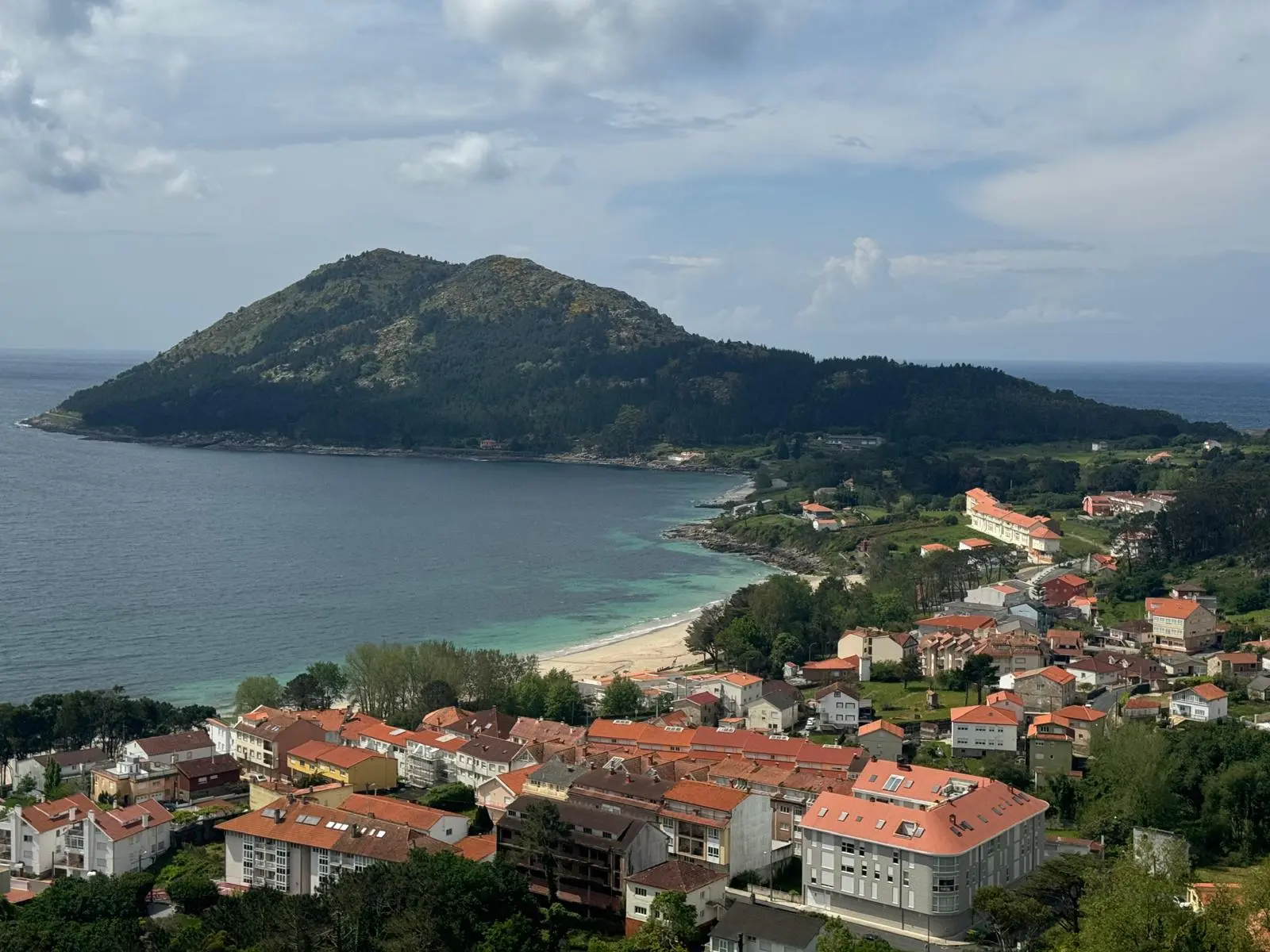
Muros fits well into a beach holiday because it does not require planning a big excursion. It is close to Louro, easily explored on foot and has enough heritage to make the visit more than just a drink by the harbour. The key is to see the town for what it is: an active fishing town with a historic urban layout and maritime resources that still define its character.
The simplest visit starts on the waterfront promenade, enters through the arcades, climbs to San Pedro and returns to the harbour. If there is more time, it is worth adding Pozo do Cachón or the old Fábrica de Sel — two places that help explain Muros's relationship with the tides, fishing, canning and boat-building.
From LouroBeach in San Francisco, the usual way to reach Muros is by car along the coastal road. The distance is short, but in summer it is worth allowing a little extra time: the historic centre is compact and it is better to park once, walk and forget about the car.
For a first visit, the practical reference point is the municipal tourist office at Curro da Praza. It is in the centre, close to the arcades and the harbour front. From there you can ask about updated opening times for Pozo do Cachón, exhibitions at Sel or guided tours.
Parking: in high season it is usually more convenient to leave the car near the waterfront promenade or at the approaches to the old town. Muros is best enjoyed on foot; moving the car within the centre adds little.
This route does not try to turn Muros into a list of monuments. It works better as an ordered stroll: harbour, arcades, squares, church, back to the sea. At a relaxed pace it can take between an hour and a half and three hours, depending on stops.
Start by the water. The harbour maintains fishing activity and helps you read the town before entering the historic quarter.
A practical stop to confirm guided tours, opening times of interpretation centres and municipal events.
The most recognisable part of Muros: stone arches, narrow streets, taverns and fishing-town architecture.
Spain.info includes these points in the old-town walk. If you arrive in the morning, the market gives more context than a simple photograph.
Climb a little from the waterfront. The change in elevation helps you understand how the town was built between the sea and the hillside.
Finish back by the harbour. If time allows, continue by car to Pozo do Cachón, Virxe do Camiño or Sel.
The Official State Gazette published on 1 July 1970 the declaration of the town of Muros as a Historic-Artistic Site. The protection recognises the value of the urban layout and the architectural ensemble, not just individual buildings. That matters: Muros is understood by walking through it, seeing how the streets descend to the harbour and how the arcades solve daily life in a place of rain, wind and maritime work.
Spain.info, the official Spanish tourism website, highlights precisely that preservation of the urban layout, the arcades, the traditional houses and the balconies. It is not a frozen image for tourists: the old town still has shops, homes, bars, a market and everyday village life.
For an unhurried visit, it is worth leaving the most obvious harbour-front line and entering streets like Real, Axesta or the crossings that connect to the inner squares. There you get a better feel for the scale of Muros: narrow facades, worked stone, galleries, balconies and a constant relationship with the estuary.
The arcades are the most recognisable element of Muros. They cover part of the lower streets and create a very natural transition between commerce, housing and the harbour. On a rainy day you quickly understand why they work so well: they let you walk under cover without separating village life from the street.
The Old Fish Market, Plaza de Santa Rosa and the Marina area are good places to pause. Spain.info mentions the cross in Plaza de Santa Rosa, dated 1789, as well as the old fish market, the stone fountain, the covered market, the Town Hall and the Arco de Don Diego. These are useful landmarks for walking without relying on a guided tour.
The recommendation is not to try to see everything in a rush. Muros rewards you if you enter and exit the arcades, climb a side street and return to the harbour. The architecture is not behind a fence: it is in the doors, the ground floors, the balconies, the steps and the rhythm of the streets.
The harbour of Muros is not decorative. Turismo de Galicia presents it as one of Galicia's important ports since the 15th century and records the construction of the Harbour of Refuge in 1880. Fishing still carries real weight, and you notice it in the boats, the fish market, the timetables and the afternoon movement when catches arrive.
According to the official Turismo de Galicia guide, the fish market allows supervised visits and the sale takes place after the auction. Do not assume you can always enter or photograph freely: it is a working space. If you want to see it from inside, the sensible approach is to ask the tourist office first.
For guests staying in Louro, the harbour of Muros adds a different layer to the trip. Louro has a beach, Monte Louro and a quieter pace. Muros has a historic town, services, a market, a harbour and daily activity. The combination works well precisely because each place contributes something different.
The former Collegiate Church of Santa María, now the church of San Pedro, appears in the official Spain.info information as one of the main points of the historic walk through Muros. It is inside the old town and does not require changing your plan: it fits naturally into the walking route through the upper streets.
Outside the most compact core, the Santuario da Virxe do Camiño helps you understand the maritime and religious dimension of the town. Turismo de Galicia describes it as a Gothic sanctuary with a tradition linked to the sea, with ex-votos and navigation memorabilia. The official Muros guide also connects it to the old hospital and to pilgrims who arrived by sea.
If you want to go inside, it is better to confirm opening times first. In coastal villages, openings can depend on season, religious services, organised visits or local availability.
Pozo do Cachón is one of the most interesting stops in Muros when you want to go beyond the historic quarter. The Ría de Muros-Noia presents it as one of the largest tidal mills in Spain. It worked by retaining water at high tide: as the tide fell, the drop in level drove the milling machinery.
The official resource of the estuary explains that the complex was built in the early 19th century, was also known as Muíño de Bazarra and operated with a dam of over 230 metres. The building could grind more than 200 kilos of maize per hour — a figure that helps convey its real scale within the local economy.
Today the space works as an interpretation centre and hosts cultural activities, meetings and tourist information. The organised visit is offered by prior appointment, lasts about an hour and is free according to the Ría de Muros-Noia tourist listing.
Practical detail: address: Rúa Anido, s/n. Coordinates published by Ría de Muros-Noia: 42°47'13.7"N 9°03'45.1"W. For visits, contact the municipal tourist office: 981 826 050.
The old Fábrica de Sel is a useful stop if you are interested in Muros's maritime history or if the weather is not good for the beach. The Concello de Muros presents it as the Centre for Maritime Heritage Interpretation, with permanent exhibitions on fishing, shellfish gathering, canning, boat-building and shipwrecks.
The Turismo de Galicia guide traces the building's origins to salting and canning activity. It also records that the factory operated linked to the canning industry until 1976. That continuity helps you read Muros within a broader story: not just a pretty town, but also work at sea, fish processing, workshops, trades and industrial memory.
If you are travelling with children or people who do not want to walk too much, Sel may work better than another lap of the old town. Before going, it is worth confirming opening times or programme with the tourist office.
The Concello de Muros organises guided tours and heritage activities. The official Ría de Muros-Noia information includes visits to Pozo do Cachón, Cova da Bruxa, Laxe das Rodas and Naraio, with prior registration at the municipal tourist office.
This is particularly useful if your visit coincides with the off season, a rainy day or a longer stay. A free walk around Muros works very well, but guided tours help provide context for elements that are easy to miss at first glance: tidal mills, petroglyphs, maritime trades, canning history or religious heritage.
Official contact: Tourist Office of Muros, Curro da Praza, 1. Tel. 981 826 050. Email: turismo@muros.gal.
Esteiro, within the municipality of Muros, hosts the Gran Prix de Carrilanas: handmade wooden vehicles with no engine that race down a roughly three-kilometre circuit using gravity. It is not an event designed from outside for tourists; it started in 1988 and retains a local cultural character that is hard to replicate.
The Official State Gazette published in 2021 the award of the title of National Tourist Interest Festival to the Gran Prix de Carrilanas de Esteiro. Turismo de Galicia places it on the third Sunday of July and mentions the Ramiro García "Gerente" circuit and the Museo das Carrilanas. Spain.info publishes the 2026 dates as 17 to 19 July.
If your stay in Louro coincides with those dates, it is worth setting aside an afternoon to head to Esteiro. Even if it does not, the event is a good clue to the character of the municipality: Muros is not only a historic quarter and beaches — it also has its own festivals and traditions in its parishes.
2026 dates: Spain.info lists the Gran Prix de Carrilanas de Esteiro from 17 to 19 July 2026. Confirm the final programme with the Concello or organisers before travelling.
In Muros it makes sense to look for seafood: fish from the market, shellfish from the estuary, octopus, empanada and simple seasonal cooking. There is no need to follow a fixed list of restaurants. In a town with an active harbour, it usually works better to look at the menu, the day's catch and realistic opening hours.
The waterfront promenade and the arcades area concentrate most of the dining options. In summer it is worth booking or going outside peak hours. Out of season the risk is the opposite: some places reduce their hours or close during the week. Before committing to a specific meal, it is better to check opening first.
If the idea is to buy something to take back to the apartment, the covered market can be a good reference in the morning. For dinner without moving the car, Louro and San Francisco also have nearby options; Muros works better for when you want an afternoon stroll, the harbour and the historic quarter.
The advantage of LouroBeach is the combination: Praia de San Francisco on foot, Monte Louro next door and Muros a few minutes by car. For a stay of several days, it avoids having to choose between beach and town. You can spend the morning on the sand, have lunch at the apartment and head to Muros in the afternoon, when the sun drops and the historic quarter is easier to explore.
It also works the other way around: market or cultural visit in the morning, beach in the afternoon. That flexibility is useful with children, older guests or trips where the weather changes quickly — fairly common on the Galician coast.
This guide uses institutional sources for heritage data, location, visits and events. Practical recommendations are written from a tourist perspective, without inventing opening times or establishments.
The historic quarter, arcades, Plaza de Santa Rosa, the old fish market, the covered market, San Pedro church, the waterfront promenade and the harbour. If you have a car and a little more time, you can add Pozo do Cachón or Virxe do Camiño.
Yes. The historic quarter is compact and is best explored on foot. There are some hilly streets, but the basic visit through the arcades, squares and harbour is straightforward.
At Curro da Praza, 1, 15250 Muros. Tel. 981 826 050. Email: turismo@muros.gal. It is the most reliable contact for opening times, guided tours and interpretation centres.
A large tidal mill built in the early 19th century. The Ría de Muros-Noia presents it as one of the largest tidal mills in Spain. It now works as an interpretation centre and can be visited by prior appointment.
Yes, if they coincide with your stay. It is a local festival with national recognition since 2021. The Gran Prix is usually held on the third weekend of July; for 2026, Spain.info publishes the dates of 17 to 19 July.
The arcades allow you to walk with some shelter. It is also worth checking visits to Pozo do Cachón, exhibitions at Fábrica de Sel or municipal activities. On rainy days, the tourist office is the best first stop.
It depends on the trip. Muros has more services and a town atmosphere. Louro offers a beach, Monte Louro and more calm, with Muros a few minutes by car. For a beach holiday with nearby cultural visits, Louro is a very convenient base.
Two apartments in San Francisco, Louro. Praia de San Francisco on foot. Muros, Monte Louro and the rest of the area within easy reach.
Check availability